Construction companies do not fail because of a lack of work. They struggle when growth outpaces the systems used to manage it.
As jobs increase, teams expand, and schedules overlap, informal processes begin to break down. Information becomes scattered, decisions become reactive, and owners feel increasingly tied to day‑to‑day operations.
Strong construction companies are built on systems, not memory or constant oversight. The most resilient businesses rely on five core systems that create visibility, consistency, and control.
What Are Core Systems in a Construction Company?
Core systems in a construction company are the structured processes and tools used to manage jobs, labour, finances, schedules, and information. These systems provide visibility and consistency so construction businesses can operate efficiently as they grow.
Without strong core systems, construction companies rely heavily on manual coordination and owner involvement, which limits scalability.
Why Systems Matter More as Construction Businesses Grow
In early stages, construction businesses often run on experience and personal involvement. This works, until it doesn’t.
As complexity increases:
More jobs run at the same time
More people need access to information
More decisions depend on accurate data
Without systems, owners are forced to:
Chase updates
Answer repetitive questions
Fix problems after they occur
Core systems replace chaos with structure and enable sustainable growth.
The 5 Core Systems Every Construction Company Needs
Every construction company needs these five core systems to operate effectively:
Job management
Time tracking and labour control
Financial and invoicing management
Scheduling and workflow visibility
Centralised information and reporting
Together, these systems create clarity and reduce reliance on manual coordination.
1. Job Management System
What it is
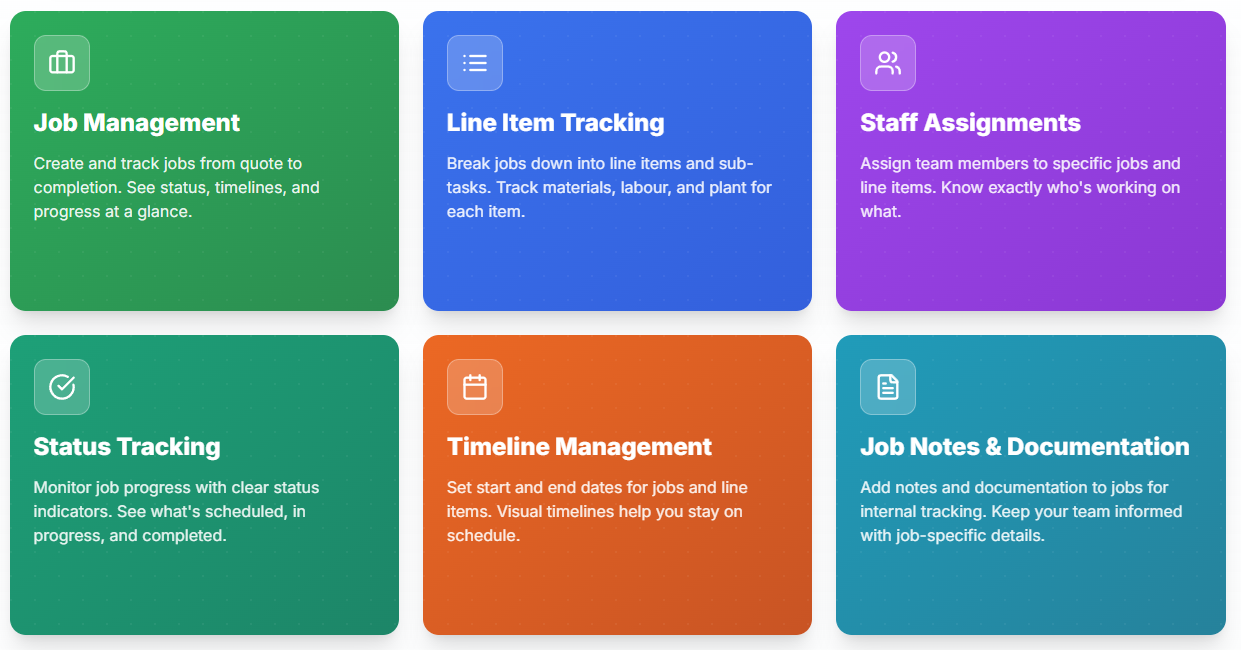
A job management system defines how work moves from quote to completion. It ensures every job follows a consistent structure, with clear stages, responsibilities, and documentation.
Why it matters
Without a structured job management system:
Jobs are run differently depending on who is involved
Information is lost between stages
Progress is hard to track
Issues are discovered late
This leads to rework, delays, and constant follow‑ups.
How Trades Panel supports this system
Trades Panel provides structured job tracking so all job information lives in one place. Job status, progress, and supporting details are visible without relying on memory or paper trails.
This creates consistency across jobs and reduces reliance on the owner to manage every detail.
2. Time Tracking and Labour Control System
What it is
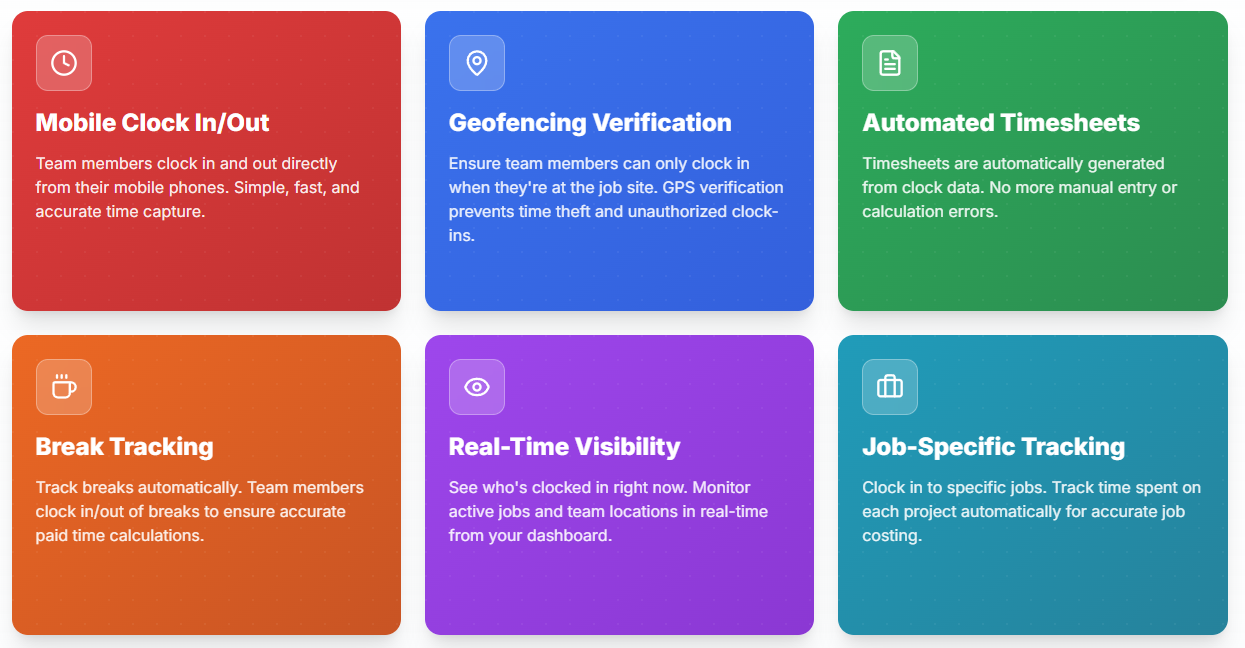
A time tracking system links labour hours directly to jobs, giving visibility over how time is actually spent.
Why it matters
Labour is one of the largest and least visible costs in construction. When time is tracked loosely or after the fact:
Productivity is hard to measure
Job overruns go unnoticed
Planning future work becomes guesswork
Effective time tracking is essential for controlling margins.
How Trades Panel supports this system
Trades Panel connects time tracking directly to jobs. This allows construction companies to see where hours are being spent and compare planned versus actual labour.
This visibility supports better decisions around scheduling, pricing, and resource allocation.
3. Financial and Invoicing System
What it is
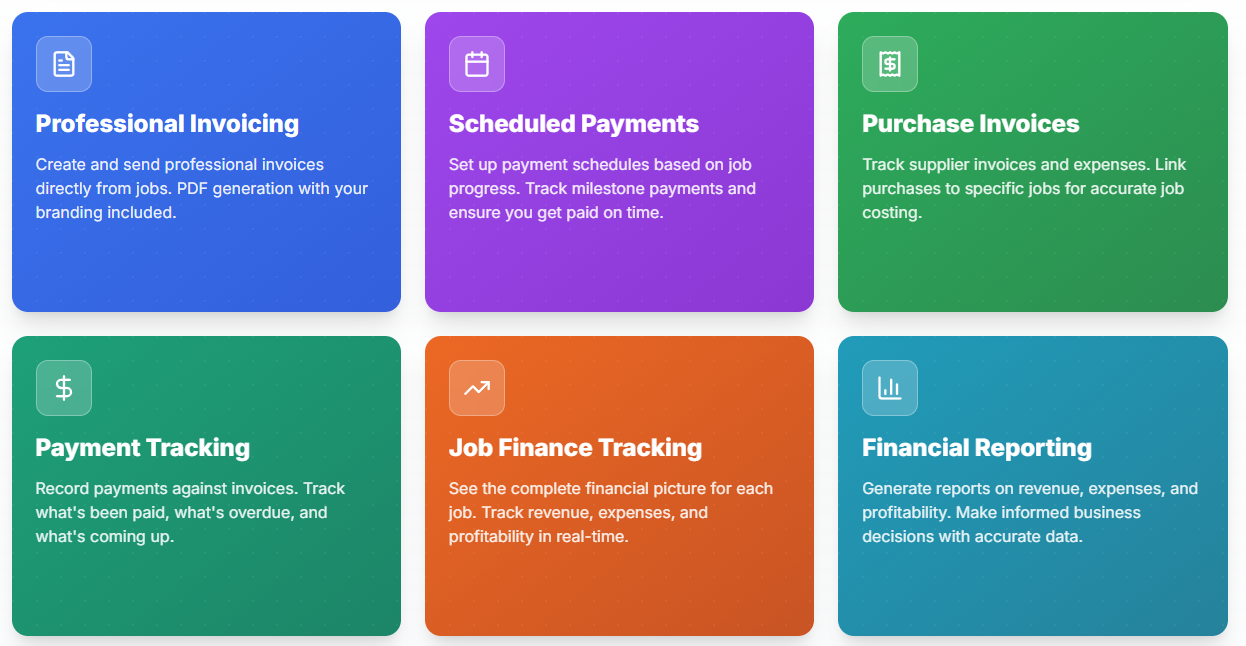
A financial system connects job activity to invoicing so work completed is accurately reflected in what gets billed.
Why it matters
Many construction businesses lose control of cash flow because:
Invoices are delayed
Job costs are unclear
Financial data is disconnected from actual work
Without a clear link between jobs and money, profitability suffers.
How Trades Panel supports this system
Trades Panel links invoicing to job progress and recorded time. This reduces errors, shortens billing cycles, and improves cash flow visibility.
By tying financial activity to real job data, business owners gain clearer insight into performance.
4. Scheduling and Workflow Visibility System
What it is
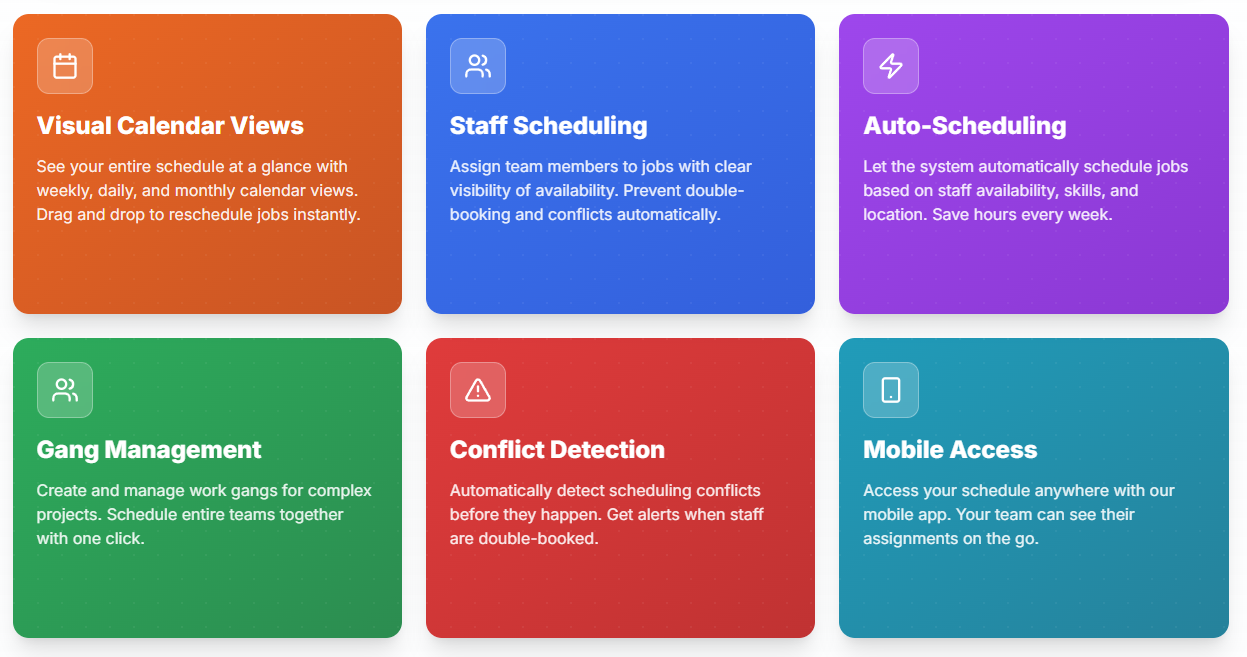
A scheduling system provides a clear view of what is happening across jobs, teams, and timeframes.
Why it matters
Without a central view of schedules:
Work overlaps unnecessarily
Deadlines are missed
Teams are over‑ or under‑allocated
Owners spend time answering “what’s happening?” questions
Visibility is critical for coordination.
How Trades Panel supports this system
Trades Panel provides scheduling and job visibility so owners and managers can see current workloads and progress at a glance.
This reduces interruptions, improves planning, and helps prevent small issues from turning into major delays.
5. Centralised Information and Reporting System
What it is
A centralised system ensures all job, time, and financial information lives in one place and can be reviewed easily.
Why it matters
When information is spread across paper, spreadsheets, emails, and apps:
Decisions are delayed
Reporting is inaccurate
Owners rely on intuition instead of data
A single source of truth is essential for control.
How Trades Panel supports this system
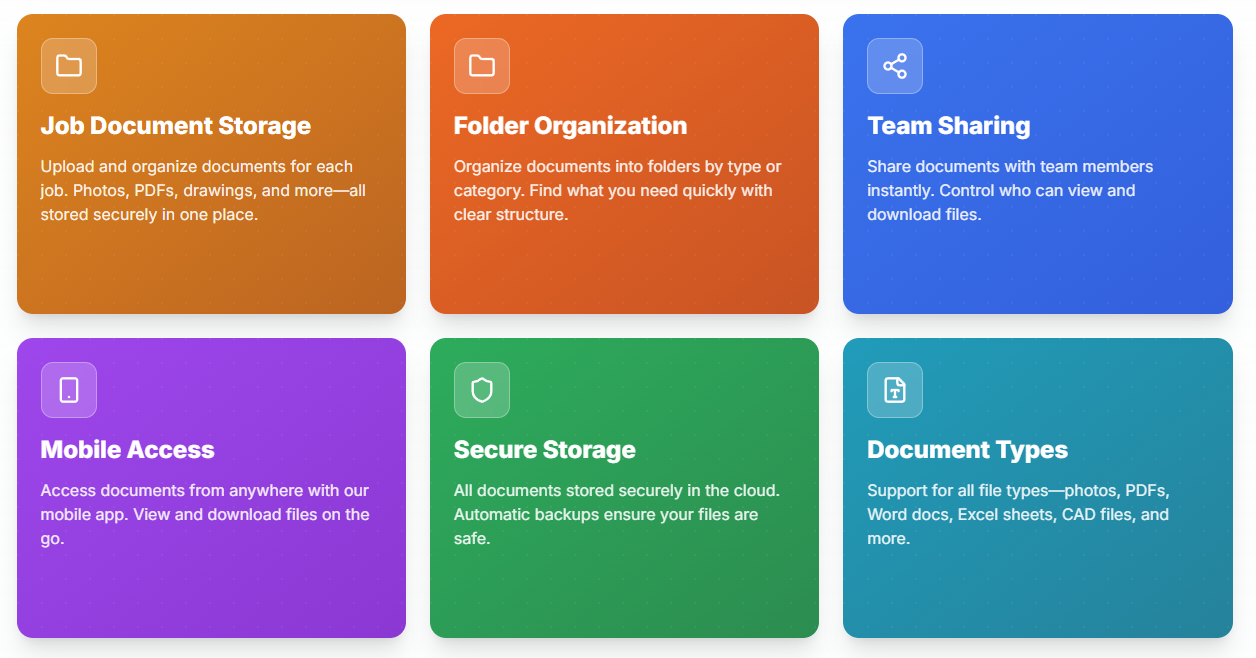
Trades Panel centralises operational data and presents it through clear dashboards and reports. This allows construction business owners to understand what is happening across the business without chasing updates.
The result is better visibility and more confident decision‑making.
Why Connected Systems Matter
Construction systems are most effective when they are connected. Linking job management, time tracking, scheduling, invoicing, and reporting reduces duplication, improves accuracy, and creates real‑time visibility across the business.
Disconnected systems increase admin and hide problems until it is too late.
Why These Systems Work Best When Connected
Each system is valuable on its own, but real control comes from integration.
Trades Panel brings these five core systems together in one platform, reducing fragmentation and manual work. This allows construction companies to scale operations without increasing stress or owner dependency.
Building Stronger Systems Starts With Visibility
Construction companies that invest in core systems are more predictable, profitable, and scalable. They spend less time reacting and more time leading.
Trades Panel is designed to support the five core systems every construction company needs, providing the visibility and structure required to grow without losing control.