Running Your Trade Business Shouldn’t Feel Reactive
Running a trade business involves many moving parts. Quoting work, scheduling teams, managing paperwork, visiting sites, and communicating with customers all require attention, often at the same time.
When these activities aren’t supported by clear trade business systems, work becomes reactive. Progress depends on constant intervention, and it becomes difficult to step back and focus on improvement or growth.
Systemising your trade business introduces structure and reduces reliance on constant involvement. It allows work to move through defined processes instead of relying on memory, availability, or manual follow‑ups.
What Does it Mean to Systemise a Trade Business?
Systemising a trade business means creating clear, repeatable processes for quoting, job management, scheduling, and customer communication, so work runs consistently without relying on constant involvement.
Why Trade Businesses Need Systemisation to Grow
Trade businesses are built on experience, craftsmanship, and reliability. As demand increases, informal ways of working can begin to create friction.
Without defined trade business systems:
Processes vary from job to job.
Information is stored across multiple places.
Visibility across active work is limited.
Decisions become centralised.
Systemisation replaces inconsistency with clarity. By defining how work is done and supporting it with the right systems, businesses operate more predictably and with greater confidence.
The Difference Between Doing the Work and Designing the Business
Many trade business owners spend most of their time ensuring work keeps moving. While essential, this often leaves little space to improve how the business operates.
Indicators that structure may be missing include:
Certain tasks requiring manual involvement every time.
Limited visibility across jobs and workloads.
Reliance on informal updates.
Hesitation to step away.
Designing the business means putting systems in place so work continues smoothly, even when attention is elsewhere. This shift is a key part of effective trade business management.
What It Really Means to Systemise a Trade Business
Systemising is the practice of creating clear, repeatable ways of working.
Rather than approaching each job differently, systemising a trade business defines:
How quotes are created.
How jobs progress from start to finish.
How customers are managed and followed up.
How teams are scheduled and coordinated.
The aim is reliability. When processes are clear and supported by the right systems, outcomes become more consistent and easier to manage.
Benefits of systemising a trade business include:
More consistent workflows.
Improved visibility across jobs.
Easier delegation and accountability.
Reduced reliance on manual oversight.
A Simple, Step‑by‑Step Framework to Systemise Your Trade Business
Systemisation does not require sweeping change. It works best when approached incrementally. This framework provides a practical way to systemise your trade business without disrupting day‑to‑day operations.
A practical way to systemise your trade business is to follow these four steps:
1. Identify the Bottleneck
Review where work consistently slows down or decisions are delayed. These constraints often appear in quoting, scheduling, approvals, or information flow.
2. Standardise the Process
Define a clear, practical approach for handling that activity. Document the steps so they can be followed consistently.
3. Support It With the Right System
Introduce tools that reinforce the process, provide visibility, and reduce reliance on manual intervention.
4. Enable the Business to Run
Train the team to use the system and allow the process to operate without constant oversight.
This is how dependency on any one person is gradually removed, and how delegating in a trade business becomes far easier.
How Trades Panel Supports System‑Led Trade Businesses
Trades Panel is trade business software designed to help businesses operate through structure rather than constant involvement.
By bringing key operational systems into one platform, it supports consistency, visibility, and delegation across the business.
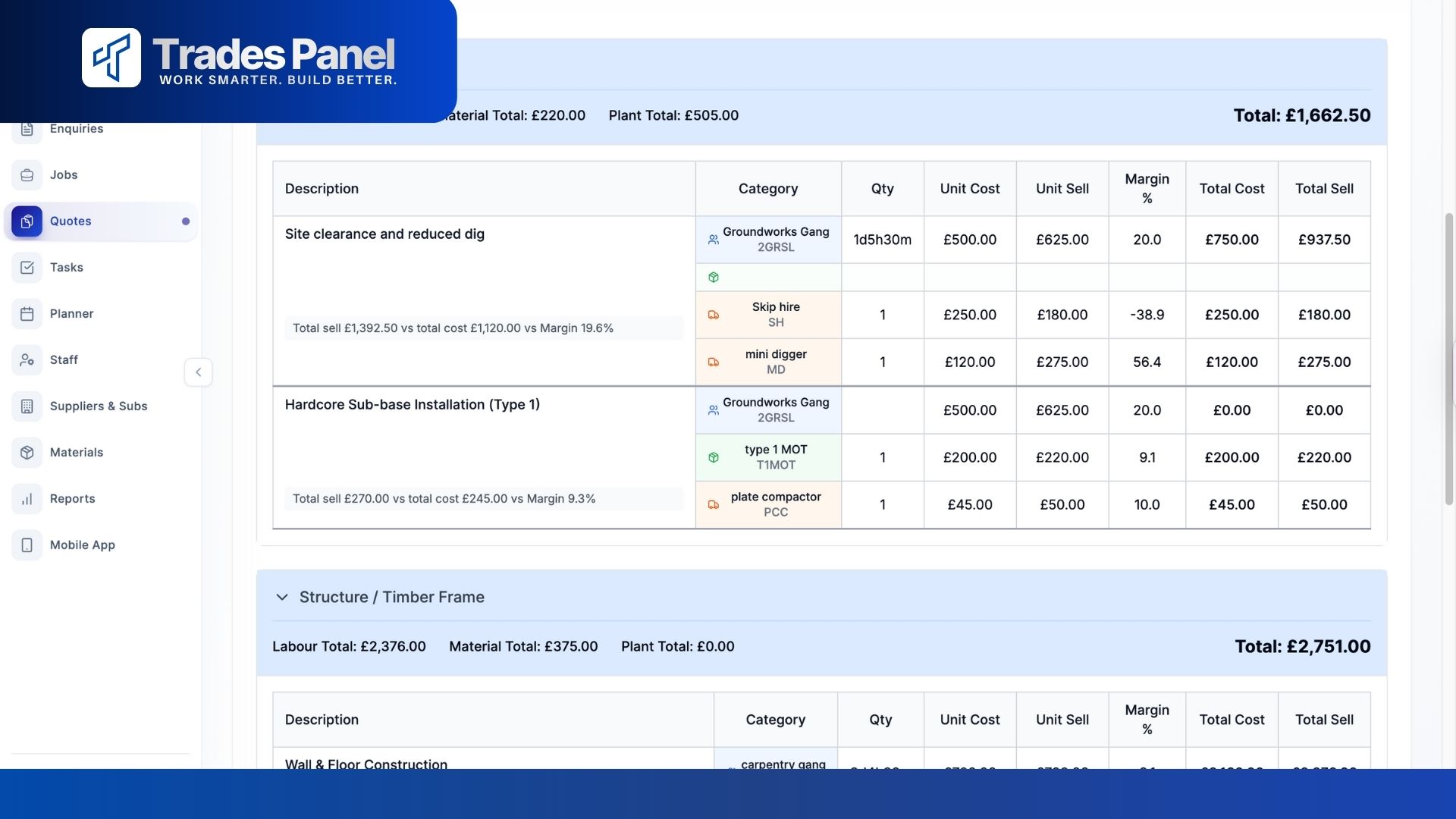
Systemised Quoting
A professional construction quoting system allows you to:
Track quote status clearly.
Convert approved quotes into jobs.
Enable team members to quote confidently.
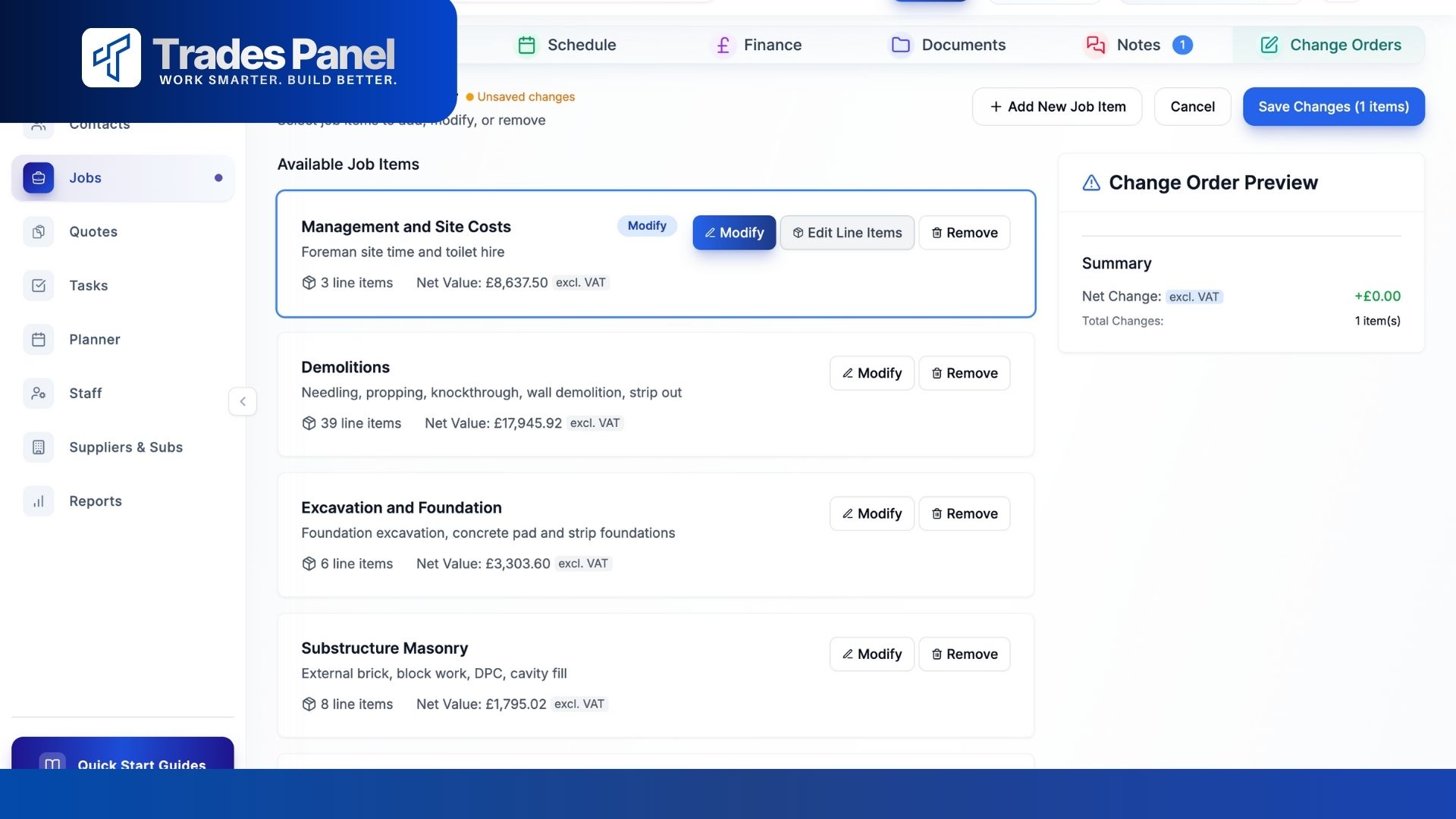
Job Control and Visibility
With Job Control & Visibility, you gain:
A clear overview of every active job.
Defined statuses, assignments, and timelines.
Confidence that work is progressing as expected.
This level of job tracking for trade businesses removes uncertainty and manual follow‑ups.
Customer Management
A central Customer Management System ensures:
Customer information is stored in one place.
Follow‑ups happen consistently.
Communication remains clear and professional.
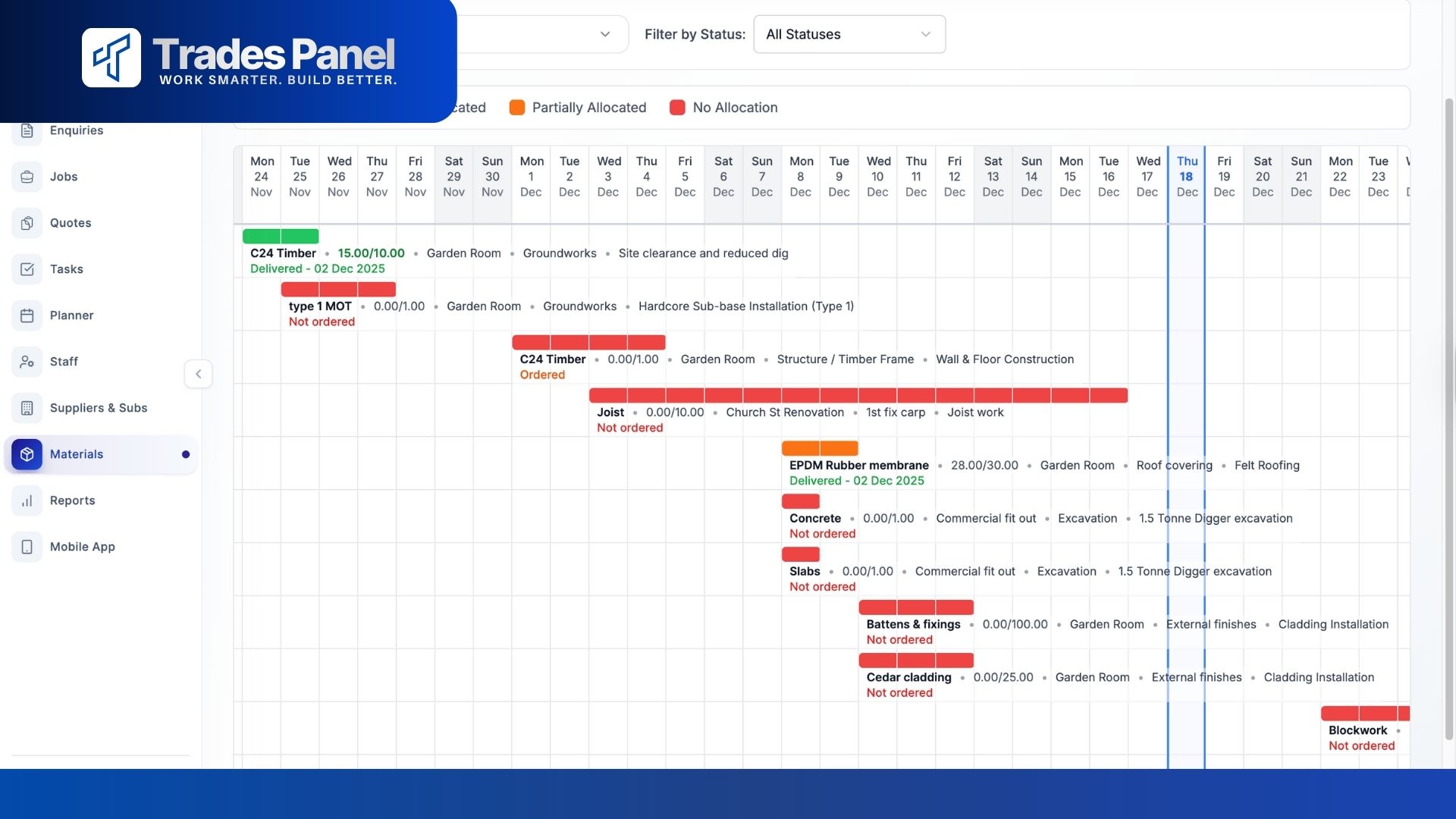
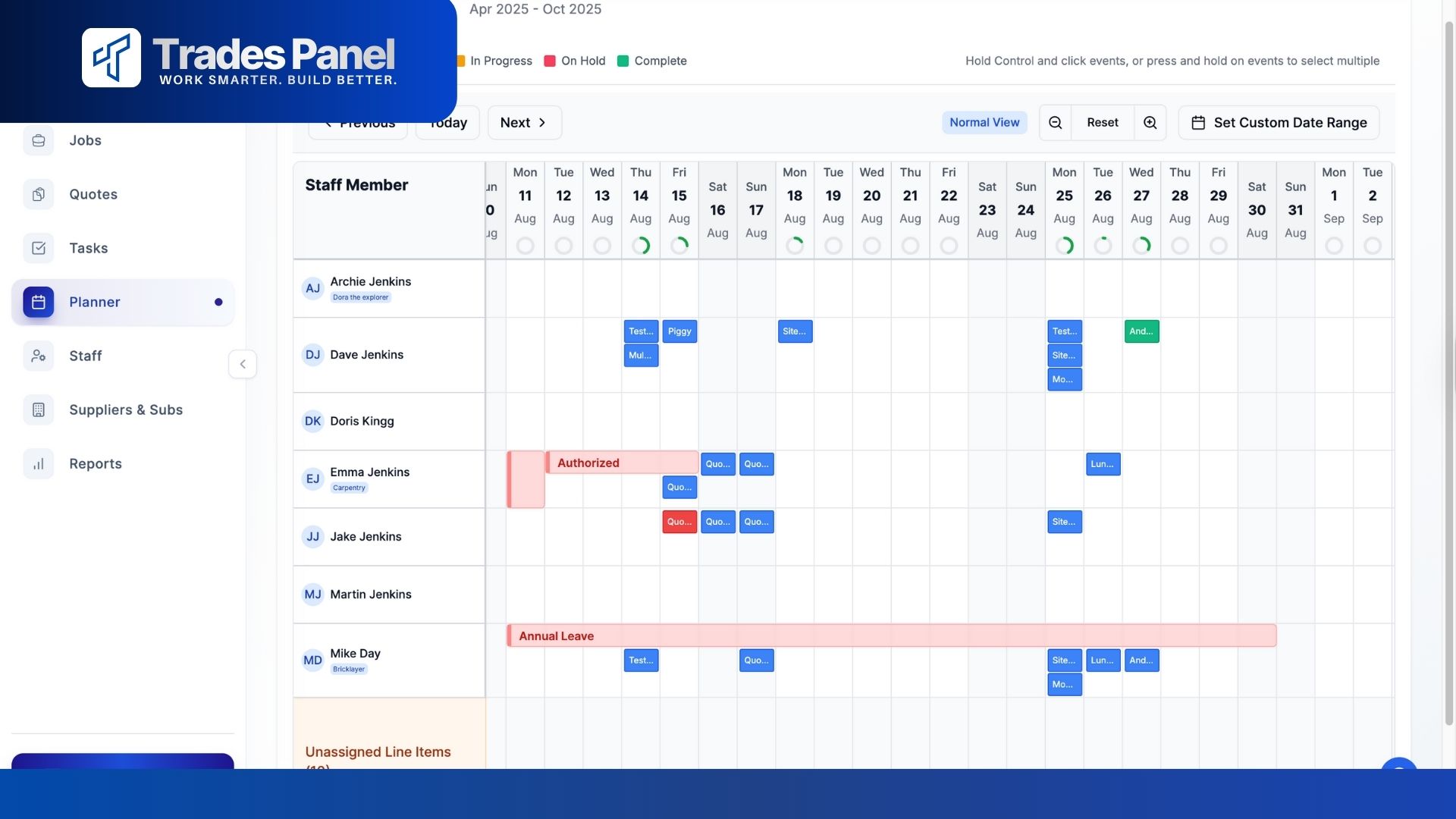
Structured Scheduling
Using construction scheduling software provides:
Visual oversight of workloads.
Clear staff allocation.
Fewer interruptions and scheduling conflicts.
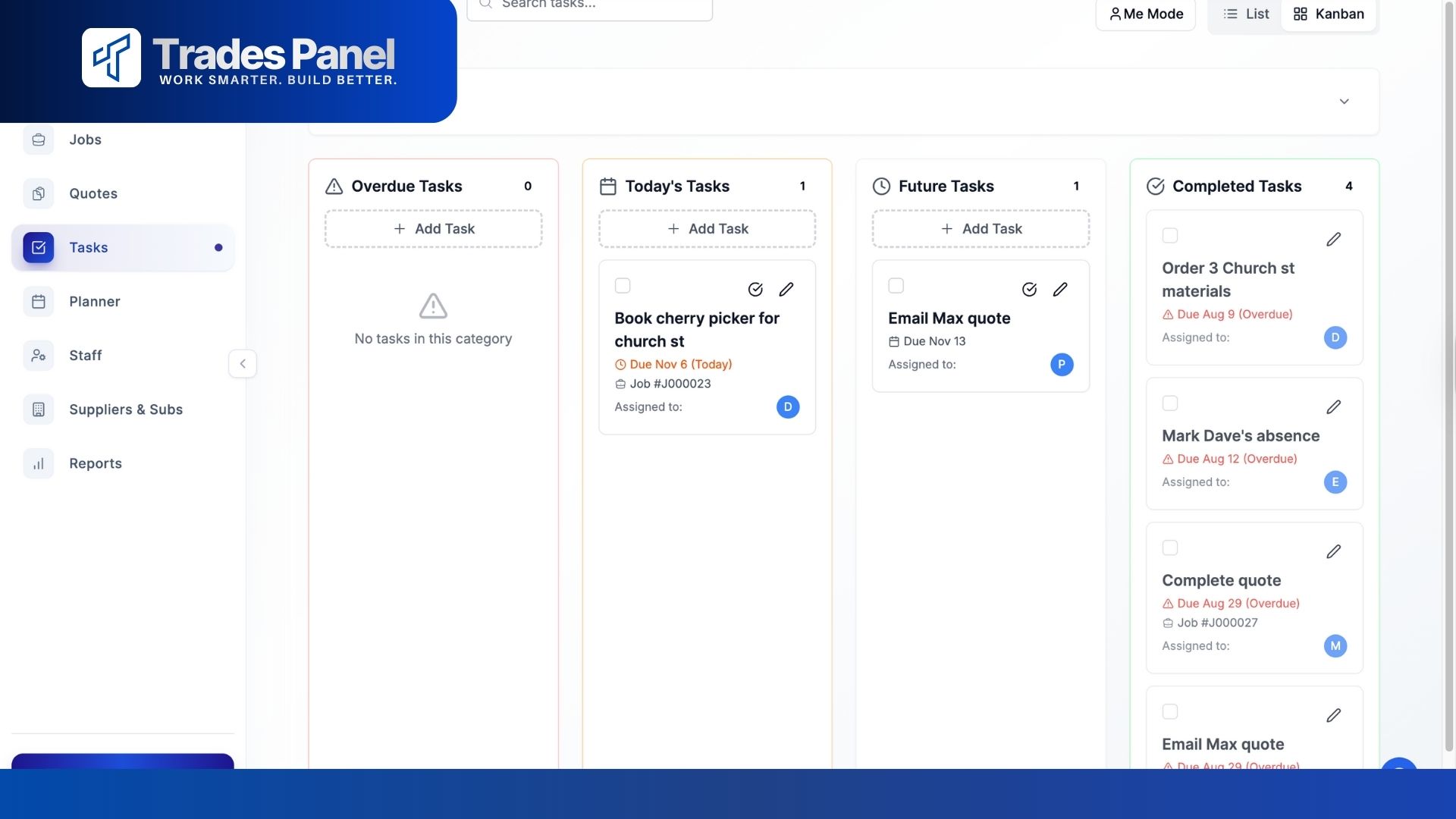
Clear Delegation and Task Management
With Team Delegation Tools and Task Management:
Responsibilities are clearly defined.
Tasks are tracked through completion.
Accountability is built into everyday workflows.
Time, Vendors, and Documents: Organised
Trades Panel also supports:
Time Tracking Systems for consistent time capture.
Vendor & Subcontractor Systems for structured coordination.
Document Management so information is organised and accessible.
Together with Business Intelligence & Control, these systems provide clear insight into performance and operations, supporting sustainable trade business growth.
Systemising a Trade Business vs Working Reactively
Reactive trade businesses rely on constant involvement, informal updates, and manual follow‑ups. Systemised trade businesses use defined processes and systems to create consistency, visibility, and control across jobs.
Why Trades Panel Is Different
Trades Panel isn’t designed to force trade businesses into rigid workflows or complex setups.
It’s built to support how trade businesses actually operate, by providing structure where it’s needed without unnecessary overhead.
What makes Trades Panel different is its focus on:
Practical systemisation, not process overload.
Incremental adoption, allowing you to start small and expand naturally.
Trade‑specific workflows designed around real operational needs.
Visibility and control without constant supervision.
Instead of stitching together multiple tools, Trades Panel provides a single, cohesive system that grows with your business: helping reduce dependency without disrupting day‑to‑day work.
Moving Towards a More Independent Business
Systemisation works best when it’s introduced gradually, without disrupting how your business already operates.
Trades Panel is designed to support this approach. You don’t need to overhaul everything at once or change the way you work overnight.
A practical way to begin is to:
Start with one operational constraint, such as quoting or scheduling.
Introduce Trades Panel to structure that process.
Allow the system to handle consistency and visibility.
From there, additional areas ( jobs, customers, tasks, time, and documents ) can be systemised at a pace that suits your business.
Because Trades Panel brings these functions together in one platform, each improvement builds on the last. Over time, this creates a business that operates with greater independence, clarity, and confidence; without relying on constant involvement.
Building a Trade Business That Doesn’t Rely on Constant Involvement
Systemising your trade business is about creating reliability, visibility, and control; for you, your team, and your customers.
When work runs through clear processes supported by the right systems, the business becomes easier to manage, easier to delegate, and better positioned for sustainable growth.
If you’d like to start building that structure:
Sign up for a free Trades Panel account and begin systemising your trade business from day one.